
Introduction:
Your First Trip in India Can Be Easy (If Planned Right)
Planning your first trip in India can feel confusing.
India is big, diverse, and full of options, mountains, beaches, temples, cities, food, culture, and adventure. Many first-time travellers feel excited but also worried about safety, budget, and planning.
At FlipMyTravel, we believe your first trip should feel exciting, not stressful. This guide is written from real travel planning experience, using simple steps that actually work for beginners.
👉 Follow this guide step by step, and your first Indian trip will be smooth and memorable.
Quick Highlights
- Step-by-step India trip planning guide
- How to choose destination & budget
- Transport, stay, and packing tips
- Safety advice for first-time travellers
- Beginner-friendly planning support
Step 1: Decide the Purpose of Your Trip
Before choosing a place, ask why you want to travel.
Highlights
- Purpose decides destination
- First trips should be simple
- Avoid trying to do everything
Activities
- Decide if you want relaxation or sightseeing
- Choose nature or city travel
- Pick comfort over adventure for first trip
Examples:
- Relaxation → Goa, Pondicherry
- Nature → Ooty, Munnar
- Culture → Jaipur, Varanasi
FlipMyTravel Tip:
For first trips, we recommend one destination, not multiple cities.
Step 2: Choose the Right Destination for First-Time Travel
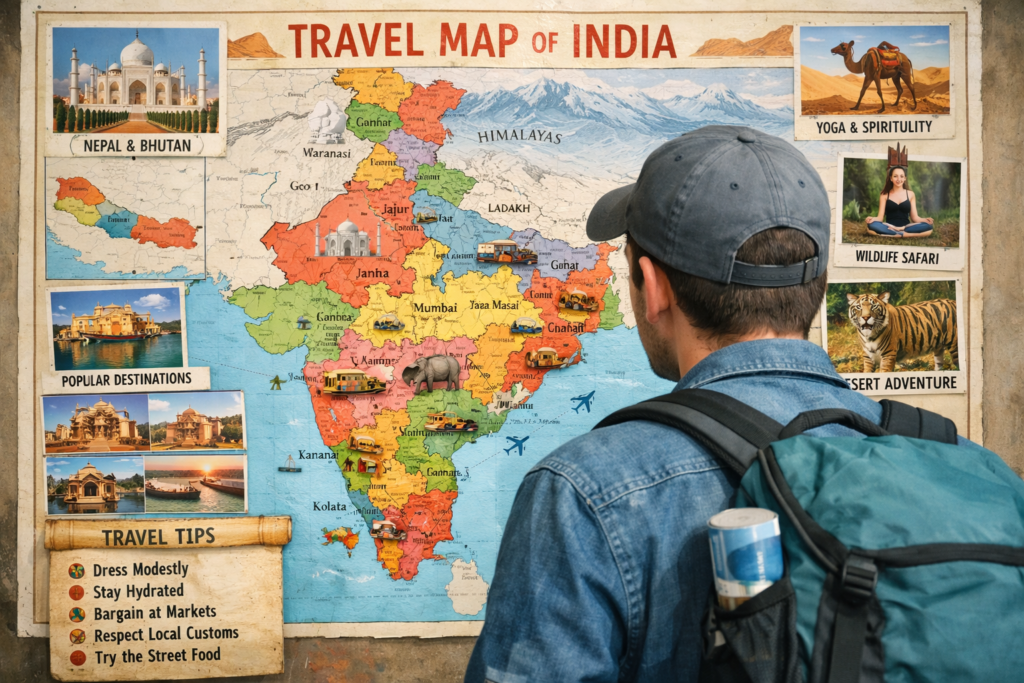
Not all places are beginner-friendly.
Highlights
- Good connectivity matters
- Safe and tourist-friendly cities are best
- Avoid remote areas initially
Activities
- Choose popular destinations
- Check availability of transport
- Read recent traveller reviews
Beginner-Friendly Destinations:
- Goa
- Jaipur
- Rishikesh
- Pondicherry
- Manali
👉 Explore below topics:
Best Places to Visit in India for First-Time Travellers
Step 3: Fix Your Travel Budget
Budget planning removes half your stress.
Highlights
- Budget controls choices
- Emergency money is essential
- Daily expense planning helps
Activities
- Decide total budget
- Split budget (transport, stay, food)
- Keep extra emergency funds
Basic Budget Split (Example):
- Transport: 40%
- Stay: 30%
- Food & activities: 25%
- Emergency: 5%
FlipMyTravel Experience:
Travellers who plan budgets enjoy trips more because they don’t worry about money daily.
Step 4: Book Transport Smartly
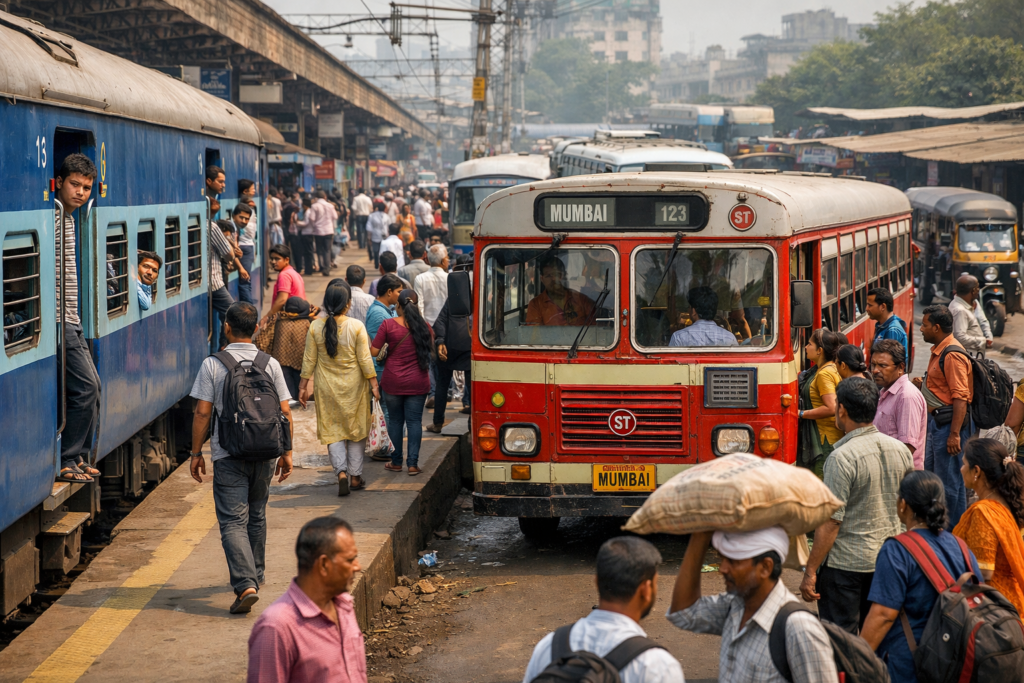
Transport is the backbone of Indian travel.
Highlights
- Trains & buses are affordable
- Flights save time for long distances
- Night travel saves hotel cost
Activities
- Compare bus, train, and flight prices
- Book official platforms
- Avoid last-minute bookings
Beginner Advice:
For first trips, choose direct routes and avoid too many connections.
Step 5: Choose the Right Accommodation
Your stay decides comfort and safety.
Highlights
- Location matters more than luxury
- Clean, well-reviewed stays are best
- Hostels are good for solo travellers
Activities
- Choose central areas
- Read latest reviews
- Avoid extremely cheap unknown stays
FlipMyTravel Tip:
For first-time travellers, homestays or mid-range hotels are safest and most comfortable.
Step 6: Plan a Simple Itinerary (Don’t Overplan)
Your first trip is not a race.
Highlights
- Fewer activities = better experience
- Rest is important
- Buffer time avoids stress
Activities
- Plan 2 main activities per day
- Keep free time
- Avoid rushing
Smart Rule:
👉 See less, experience more.
Step 7: Pack Smart Using a Checklist
Wrong packing causes discomfort.
Highlights
- Weather-based packing is key
- Carry essentials in hand bag
- Avoid overpacking
Activities
- Use a checklist
- Pack light clothes
- Carry basic medicines
👉 Explore below topics:
Travel Packing Checklist for Indian Trips
Step 8: Prepare for Safety & Health
Safety preparation builds confidence.
Highlights
- Awareness keeps you safe
- Medicines are important
- Emergency contacts help
Activities
- Save emergency numbers
- Share itinerary with family
- Avoid isolated areas at night
Reality Check:
India is safe for travellers who stay alert and respectful.
Step 9: Understand Local Culture & Food
Respect makes travel smoother.
Highlights
- Modest dressing avoids attention
- Local food is safe and tasty
- Basic local phrases help
Activities
- Dress according to place
- Eat where locals eat
- Be polite and patient
Step 10: Stay Connected & Informed
Information reduces confusion.
Highlights
- Mobile data is essential
- Offline maps help
- Local help is valuable
Activities
- Buy local SIM if needed
- Save offline maps
- Ask hotel staff for advice
Why Trust FlipMyTravel?
At FlipMyTravel, we specialize in:
- First-time traveller guidance
- Budget-friendly trip planning
- Honest, experience-based advice
Our content is written from real Indian travel planning, not copied checklists.
👉 Explore more topics for helpful travel information:
- Budget Travel Tips for Indian Travellers
- Common Travel Mistakes to Avoid
- Solo Travel in India: Safety Tips
FAQs
How do I plan my first trip in India?
Choose one destination, set a budget, book transport early, and pack smartly.
Is India safe for first-time travellers?
Yes, with basic planning and awareness.
How many days are ideal for a first trip?
3–5 days is perfect for beginners.
Final Thoughts: Start Simple, Travel Confidently
Your first trip in India does not need to be perfect. It just needs to be well-planned and stress-free.
With this step-by-step guide and trusted support from FlipMyTravel, your first Indian trip can be the beginning of many more memorable journeys.