
The Indian government is preparing a new financing plan to expand electric bus adoption in India by making loans cheaper for private bus operators. This move aims to help private companies buy more electric buses, especially for long-distance and intercity routes, and overcome the financial hurdles that currently slow down the transition from diesel to electric vehicles. The scheme will use funds from national financial institutions to offer lower interest rates and longer repayment periods, making electric buses more affordable for transport operators across the country.
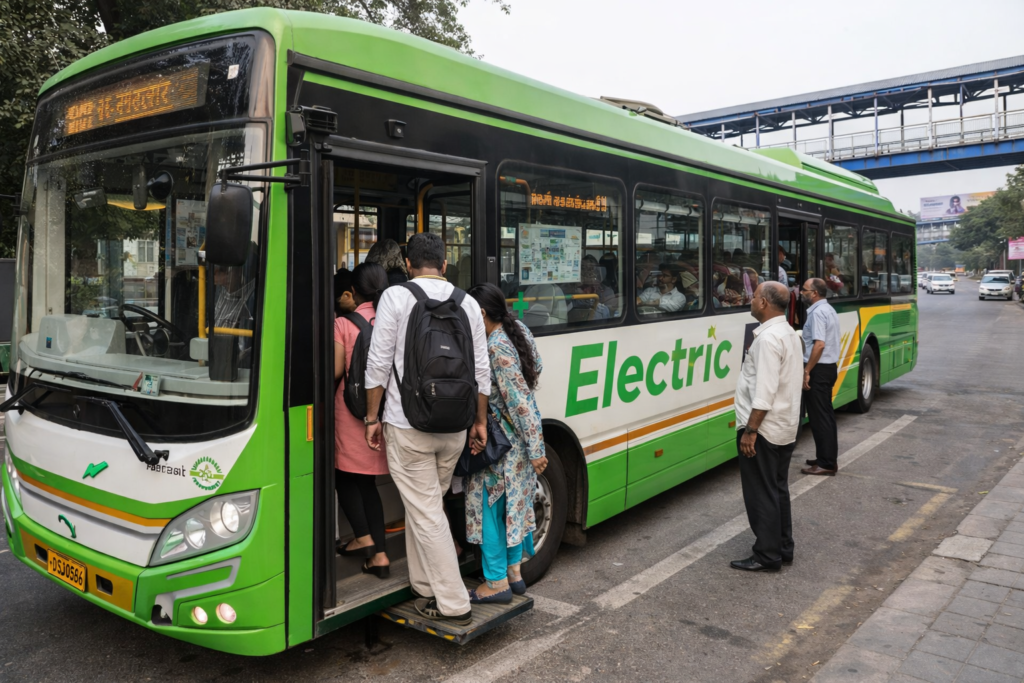
What’s Happening
Electric buses in India cost about 2.5 to 3 times more than diesel buses, making their upfront cost a major barrier for adoption — especially among private operators who manage nearly 90% of India’s bus fleet.
To tackle this challenge, the Central Government is designing a credit facilitation scheme that will make borrowing cheaper and help non-banking finance companies (NBFCs) fund electric bus purchases. The plan is being developed by the Ministry of Heavy Industries in coordination with senior financial agencies.
Under the plan, funds will be made available to lenders such as the Small Industries Development Bank of India (SIDBI) and the National Bank for Agriculture and Rural Development (NABARD), which will then provide low-cost credit to electric bus operators through extended loan tenors and lower interest rates.
Who It Affects
This financing initiative is designed to benefit:
- Private electric bus operators seeking affordable loans for fleet expansion
- Transport companies and NBFCs providing commercial vehicle finance
- Urban and intercity commuters who will see more electric buses on the road
FlipMyTravel users as more e-buses enter service, planners can show expanded route options for green travel on our platform
Private operators play a vital role in India’s public transport network, and easing financial burdens for them could accelerate electric bus deployment nationwide.
Where It Will Apply
The scheme will impact electric bus deployment across India — from metro cities like Delhi, Bengaluru and Mumbai to intercity routes in smaller towns as well. Many cities are already expanding their electric bus fleets under schemes like PM E-Drive and demand-aggregation tenders for thousands of new e-buses.
By improving access to credit, the new plan aims to support both public and private fleets in adopting electric buses more quickly and sustainably.
When It’s Expected
Officials say the financing plan is likely to be rolled out within the next six to 12 months, as key policies and fund-flow mechanisms are finalised. Once in place, the scheme could transform private electric bus financing — expanding e-bus counts in operation over the next few years.
Government Strategy & Context
Transport and sustainability experts see this move as complementary to existing programs like PM e-Drive and state-level electric bus initiatives, which have already earmarked funds for tens of thousands of e-buses. The new plan shifts the focus from only subsidies to making finance itself affordable, which many industry experts say is crucial for private operators.
The collapse of some EV financing firms in recent years has made lenders more cautious about commercial electric vehicle loans. By spreading risk and maturing credit mechanisms, the government hopes to build confidence in the EV finance market and expand electric bus adoption.
Highlights – At a Glance
Cheaper Loans for Electric Bus Operators
Government will channel funds through SIDBI and NABARD to reduce interest and extend loan tenors.
Focus on Private Sector
Private operators dominate India’s bus market and face high upfront costs for e-buses.
Expected Within a Year
The scheme is likely to launch in the next 6–12 months.
Boosts Green Mobility
This financing boost supports India’s transition from diesel to electric buses nationwide.
Activities – What’s Next
Policy Finalisation
✔ Finish designing the loan scheme framework and fund structure.
➡ Government and financial institutions to set final terms.
Partnership with Lenders
✔ SIDBI and NABARD to ready fund disbursement mechanisms.
➡ Banks and NBFCs to build electric bus loan products.
Operator Outreach
✔ Educate private bus operators about new loan options.
➡ Workshops, webinars and toll-free support lines.
Platform Update
✔ FlipMyTravel to expand route planning with updated electric bus networks.
➡ Real-time tracking and bus search features once fleets grow.
The Indian government plans to launch a scheme to offer cheaper loans for electric bus adoption by making finance more affordable for private operators. Funds will be channelled through SIDBI and NABARD to non-bank lenders, reducing EMIs, extending repayment periods, and lowering barriers to purchase e-buses. The initiative aims to accelerate the shift from diesel to electric buses nationwide within the next 6–12 months.